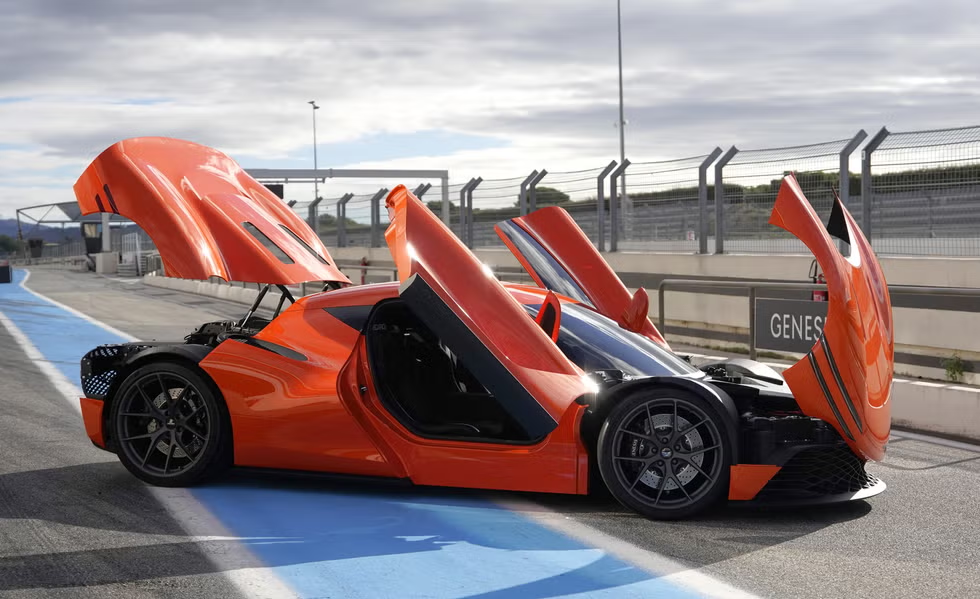
Genesis launches the new future GT3 car model
Genesis is working on a bold and genuinely intriguing project that reflects the GT3 racing spirit the brand wants to embrace from now on, the Magma GT Concept. The first thing that grabs attention is the color: a “almost red” shade called Magma, clearly inspired by some of the world’s most iconic supercars.
But it’s not just about a well-shaped body. Genesis also aims to step into global GT racing with what it has named the Magma GT. This is how Hyundai’s luxury brand chose to present itself: with a concept that intends to adopt a mid-engine V8.
The idea for the powertrain comes directly from the Genesis GMR-001 hypercar, which will debut in the WEC championship in 2026. As a result, the Magma GT, which won’t arrive before 2028. It is expected to feature a derivative of the 3.2-liter turbo V8, easily capable of delivering around 600 horsepower.
The hybrid component? More than welcome, especially if it can pair effectively with the combustion engine. On one hand, it helps meet emissions standards; on the other, it gives the car an extra performance push. Typically, an electric system contributing around 100 horsepower fits perfectly in this type of supercar, bringing the combined output to roughly 700 horsepower. Absolutely not bad.
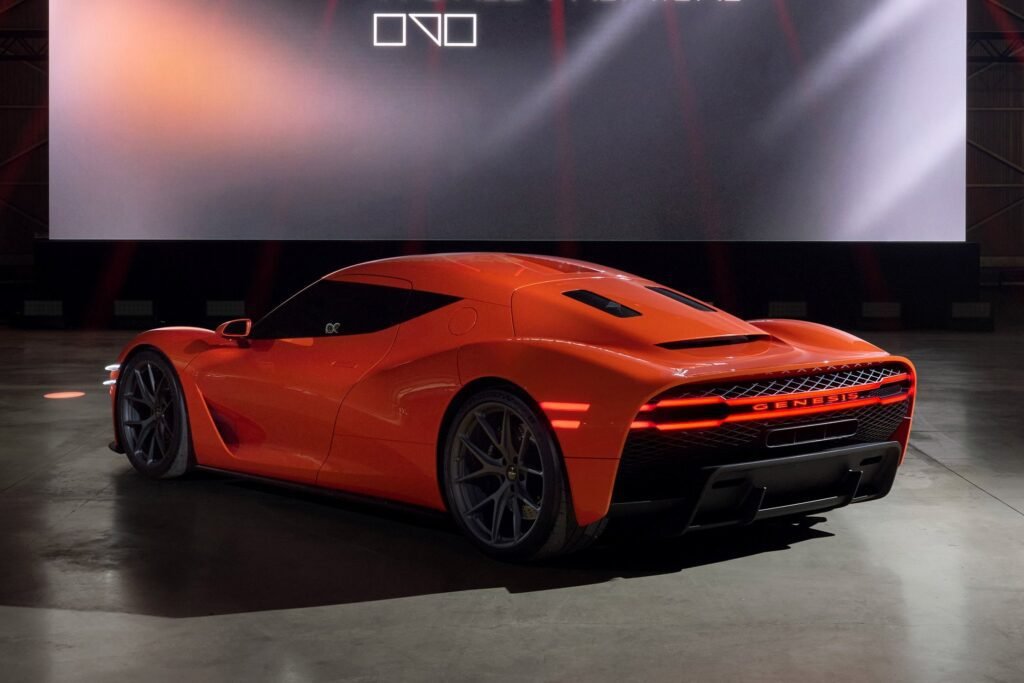
The Genesis Magma GT will differ from the actual presentation model
As for the design, the production car will inevitably differ in some areas from the current concept. Several years of development still lie ahead, including aerodynamic refinements and solutions that will emerge over time. Genesis plans to homologate the Magma GT for GT3 racing and will produce GT3-spec versions for private racing teams.
Production may fall under the guidance of Cyril Abiteboul — former Renault and Alpine Formula 1 team principal. He has been leading Hyundai Motorsport since late 2023. He is also overseeing the development of the GMR-001 hypercar set to compete at the 2026 24 Hours of Le Mans.
GT3 and customer racing programm

Looking at Genesis’s motorsport strategy, this car could become the central pillar for customer racing programs. Especially for teams purchasing the GT3 variant to compete in different championships. If the model stays on sale long enough, it could generate substantial revenue, providing the brand with stable income and allowing it to expand its long-term projects.
Donckerwolke notes that supercars typically follow long product cycles — the production Magma GT platform should last about 14 years, and that profitability comes from introducing a steady flow of variants. “You launch the base car, then do an S, and a GT3, and then a roadster. Then you give the car a big mid-life facelift and do it again. It’s not rocket science,” he says.









Post Comment