F1, how does the floor plank wear rule work?
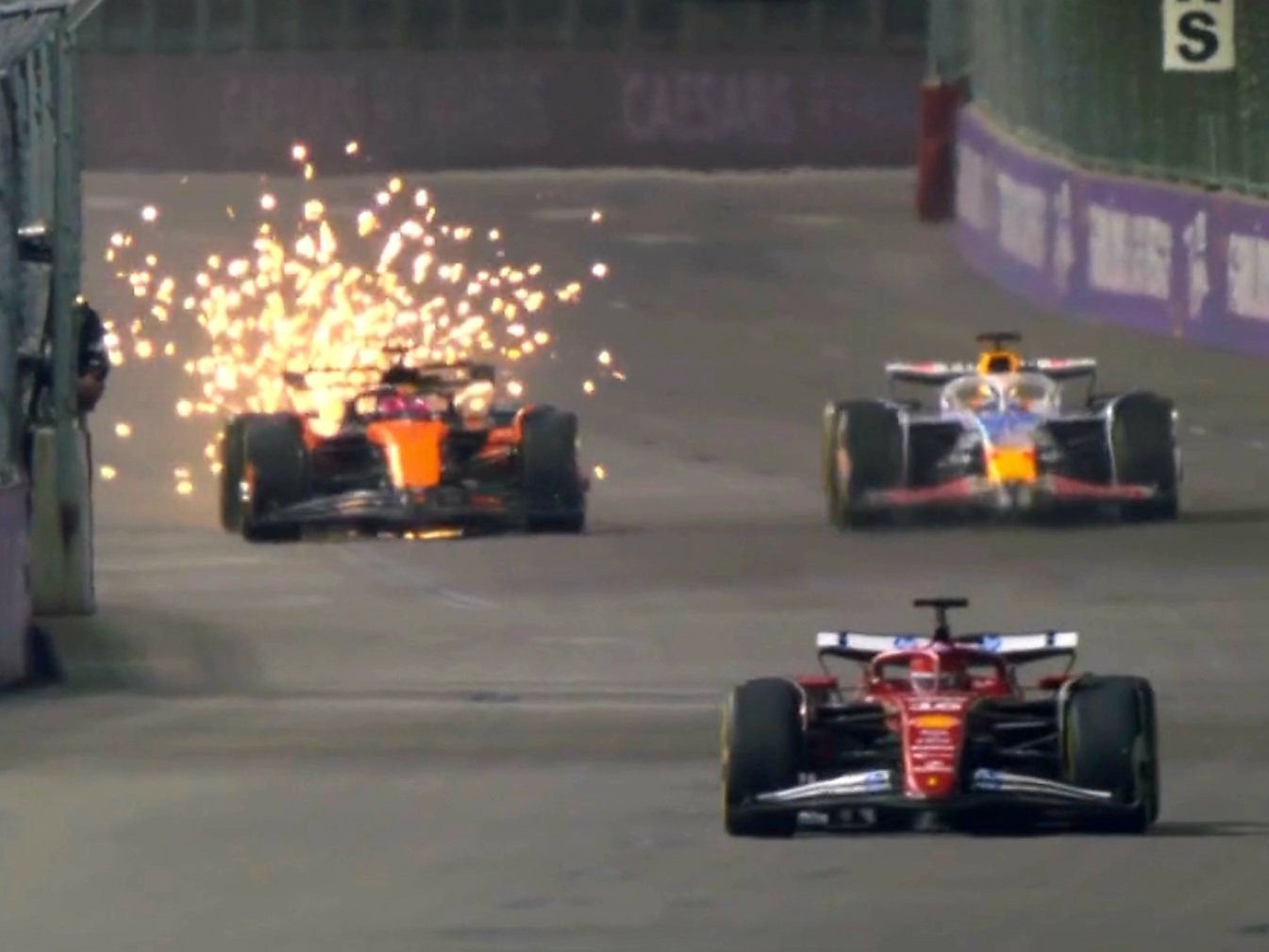
The F1 Las Vegas Grand Prix seemed perfectly straightforward: Max Verstappen ahead of Lando Norris, McLaren satisfied, and the championship picture shifting just enough to keep things interesting. But the real plot twist arrived after the race, when the FIA announced the double disqualification of both McLarens. An irregularity on the underside of the car due to excessive plank wear rule.
A brutal hit that overturned the classification and brought back under the spotlight a rule that has already claimed victims earlier this season. The same infringement had led to a double Ferrari disqualification in Shanghai.
The F1 Plank wear rule explained
Everything revolves around a simple concept: running the car as low as possible generally gives a noticeable aerodynamic benefit. The lower the floor, the more efficiently the car seals airflow underneath, the more downforce it produces. And the faster it goes.
But there is a price. If the car is too low, it repeatedly scrapes the asphalt, wearing down the plank mounted under the chassis. Push it further and you enter porpoising territory, the violent bouncing caused by unstable airflow under the floor. Push it even more, and you enter the disqualification zone.
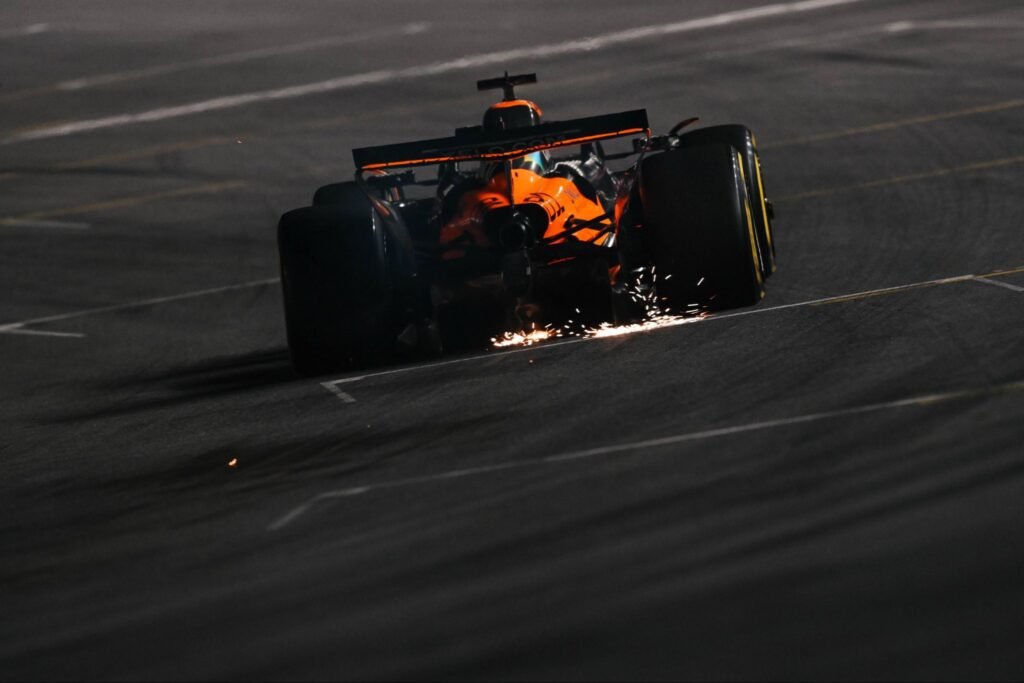
After every race, the FIA conducts technical inspections on a selection of cars. Contrary to a widespread belief, these checks are not entirely random. Telemetry across the weekend reveals which cars have experienced significant bottoming, meaning heavy contact with the track surface. And those cars become primary candidates for scrutiny.
In the past few days, we also did an in-depth look at the ranking of damages caused by the various drivers in 2025. And there are definitely some interesting data that came out
Once brought into the scrutineering area, the FIA under the directions of Jo Bauer measures the thickness of the plank in several designated points. The rule is clear: the plank starts with a thickness of 10 mm with a tolerance of 0.2 mm, and after the race it must not measure below 9 mm in any of the reference areas. If even one of those points drops under the limit, the car is automatically illegal. No intent, no excuses, no debate. Excessive wear means the car ran too low and gained an illegal advantage.
FIA 2025 Formula 1 Technical Regulations – Plank Assembly (Article 3.5.9)
Double zero finish for Mclaren in Las Vegas
This is exactly what happened to the two McLarens in Las Vegas. During post-race F1 checks, at least one of the reference points was found below the minimum permitted thickness, making the double disqualification unavoidable. A harsh but straightforward verdict: if the floor wears beyond what the regulations allow, whatever happened on track becomes void

From a sporting perspective, the consequences were enormous. Verstappen’s chase for the championship suddenly took a very different shape. Norris still leads the standings with 390 points, but behind him Verstappen and Piastri are now tied at 366, with only two races remaining.
The double disqualification effectively gifted Verstappen 25 points, cutting the gap to just 24. The mission remains incredibly difficult, almost unreal, but no longer impossible.
And here comes the bitter thought: if Norris were to lose the world championship because of this plank irregularity, the 2025 Las Vegas Grand Prix could become a day that McLaren will struggle to forgive themselves for. Sometimes, in Formula 1, a few millimetres of worn wood are enough to change a race, a championship, and an entire season’s destiny.









1 comment