F1 2026: What’s Changing in the New Regulations?
The 2025 F1 season is drawing to a close, with only two races remaining, Qatar and Abu Dhabi, and a tight battle still unfolding between Verstappen and Norris. Nobody seems to be thinking about a F1 2026 regulations guide yet for the major changes. But a major regulatory shake-up is on the horizon. For now, everyone wants to enjoy the finale, which has featured remarkable internal battles. Particularly at McLaren: first with Piastri, then with Norris, dominating much of the championship.
After securing the Constructors’ Championship in 2024, McLaren has once again found its rhythm this year and is well-positioned to claim the Drivers’ Championship. Norris is heading into the final two races with a 24-point lead over Verstappen.
Regarding the 2025 season, we compiled an interesting ranking of the drivers who generated the highest costs for their teams. Crashes are a factor not to be underestimated when assessing a season.
Once this season ends, the big question arises: how will teams prepare for 2026? The first step is understanding the technical revolution that will transform the cars completely. The cars themselves will only be revealed in February, but we can already break down the 2026 regulations in detail.
F1 2026: Engine and Power Unit
Let’s start with the core component: the engine powering the 22 cars on the grid (with the addition of Cadillac). The base remains the same as in 2025. A V6 turbo-hybrid—but the electric component will increase dramatically to 50% of total power. In other words, half the power will come from electricity, and the other half from the combustion engine. In 2025, the electric contribution was around 20%.
Another significant change that we have to mention in this guide is the removal of the MGU-H, the system that recovers energy from the turbo’s heat. The power unit becomes simpler, easier to manage, and less costly to develop.
The “blood” fueling the car’s heart will also change: from 2026, sustainable fuels (e-fuels) will be used exclusively. In 2025, they were only partially used, not as a full replacement.
Chassis and Aerodynamics changes
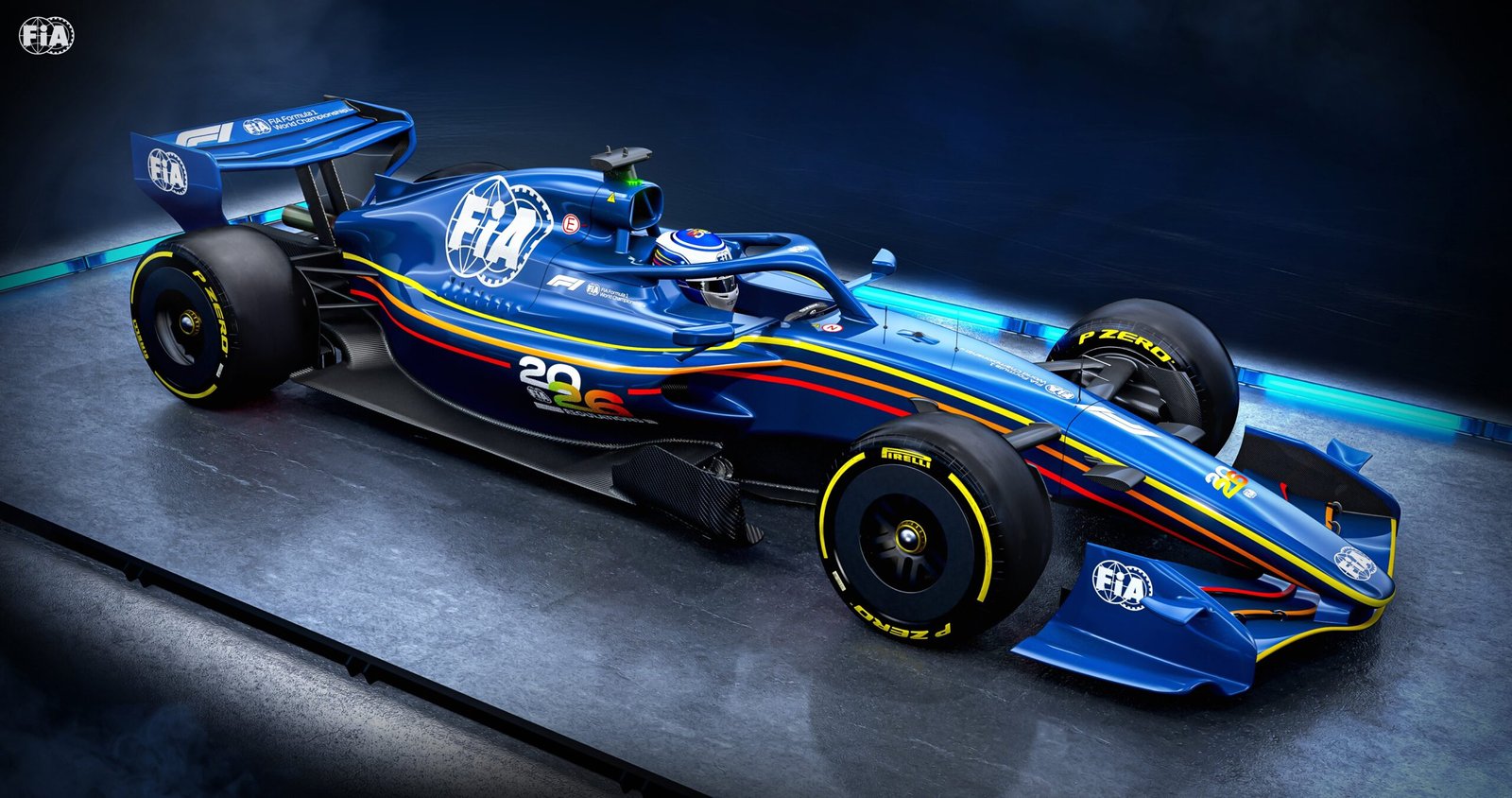
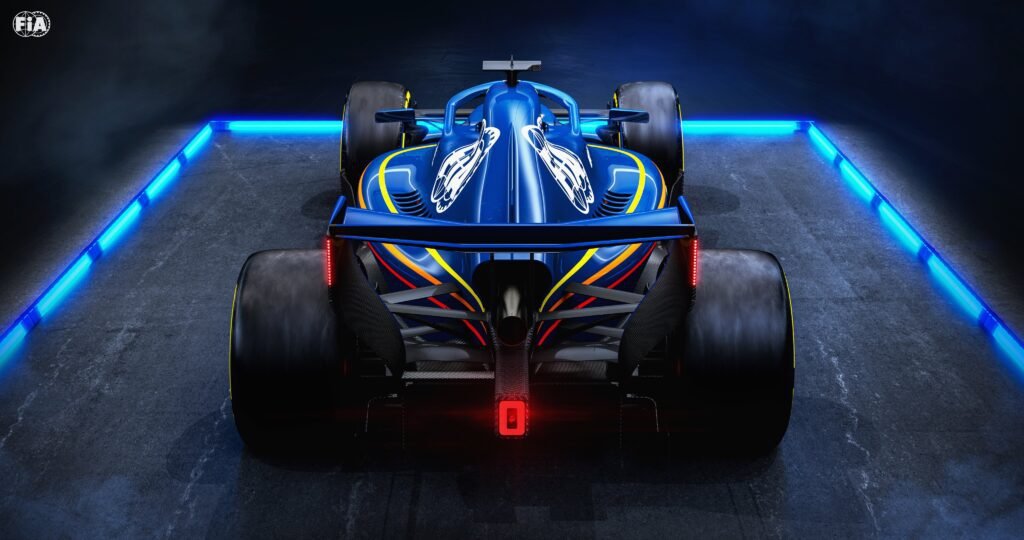
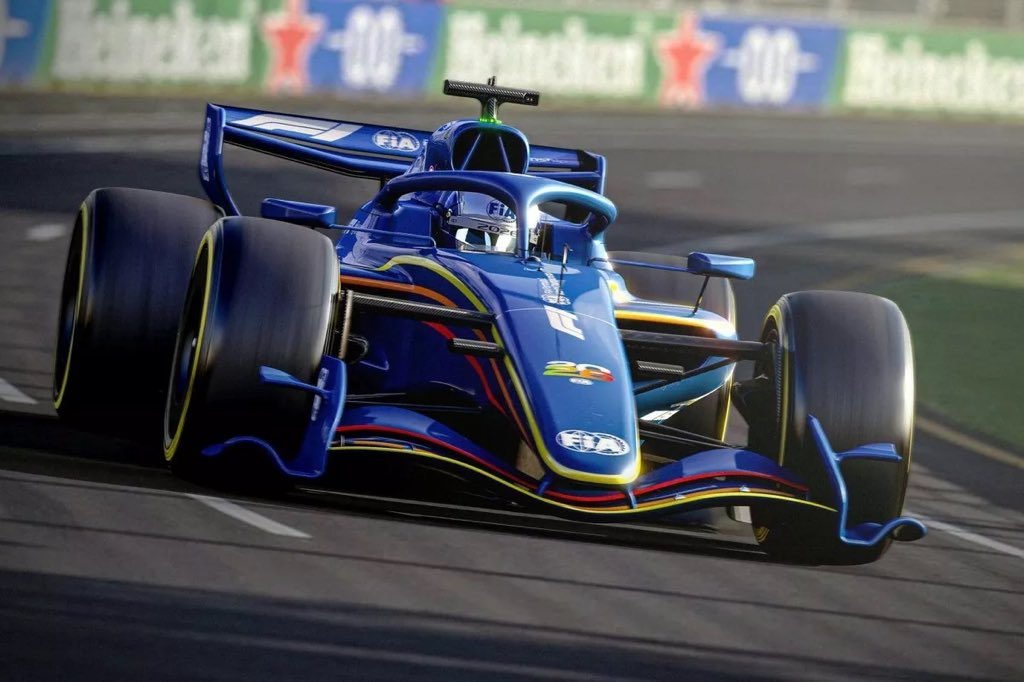
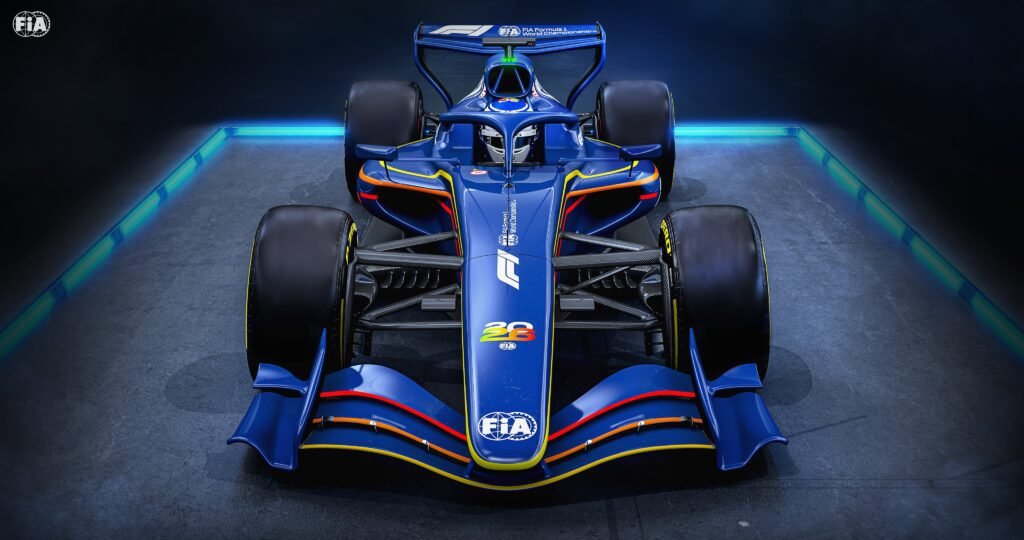
The F1 2026 cars, following the new regulations, will be more compact than current ones, with a wheelbase reduced by 20 cm (from 3600 mm to 3400 mm) and weight decreased by about 20 kg. The major innovation is active aerodynamics, which will automatically adjust the downforce of the front and rear wings depending on the situation.
Two modes will be available:
- Z-mode, for corners, with wings generating more downforce.
- X-mode, for straights, with a much lower profile.
Despite these changes, cars will lose around 30% of downforce compared to today, making them slightly less “stuck” to the asphalt. The upside? Reduced aerodynamic disturbance and easier overtaking when following another car closely.
The traditional DRS flap disappears, replaced by an electric boost system, similar to Formula E, providing extra power at key moments.
Energy recovery under braking will also double, allowing for more frequent battery recharge and better use of the electric component.
Safety, Advantages, and Team Strategies guide
All these innovations come with a significant safety boost: improved side protection, two-stage front crash structures, enhanced protection for side fuel cells, and new load standards in case of rollovers.
A generational shift like this also brings clear advantages: smaller cars, unchanged total power, and reduced turbulence for cars following closely, which should enhance on-track battles and spectacle.
On the other hand, the new balance between combustion and electric power will challenge teams to optimize performance. Regarding suppliers.
Mercedes will continue supplying engines to itself, Williams, McLaren, and Alpine;
Ferrari will supply Cadillac and Haas
Red Bull will support Racing Bulls with Ford
Audi will supply its own engine
Aston Martin will receive support from Honda.
This new mix of suppliers and clients will need to adapt to the F1 2026 regulations changes, using testing and early races to understand the new power units, improve reliability, and navigate what promises to be a thrilling season. A guide to 2026 that we will update as more information becomes available, to make everything as clear as possible.






Post Comment